Can You Tell Which Students Will Succeed?
After 30 years of teaching music, acting, and developing artists, some patterns are hard to miss.
Years ago, during an interview with Carol Anne and me on WHKY's First Talk with Hal Row, Hal asked a question that has stuck with me ever since.
I'm paraphrasing after all these years, but essentially:
Can you tell which students are going to succeed?
It's a deceptively complicated question.
After teaching since 1996, and after spending most of my adult life working professionally as a musician, actor, director, composer, producer, songwriter, and assorted other things that apparently don't fit neatly on a business card, I think I have an answer.
Sometimes.
But probably not for the reasons people expect.
First, What Does Success Mean?
Before you can identify a successful student, you have to decide what success actually is.
For me personally, success in the arts was never necessarily about becoming famous. I wanted to work in these industries and make a living doing what I loved.
If you are not doing what you love, you are wasting your time. — Billy Joel
That has meant performing, acting, directing, writing, composing, producing, recording, teaching, creating media, and finding ways to remain professionally creative over a very long period of time.
Someone else may define success as getting a big break, landing a Broadway show, signing a record deal, booking a film, or becoming famous.
And there's nothing wrong with any of those goals.
But another student may define success as finally being able to sit down at the piano and play the song they've always wanted to play.
For an actor, success might mean walking into an audition without being terrified.
For a singer, it might mean hitting a note comfortably that used to feel impossible.
For a songwriter, it could be finishing the first original song.
For an adult who hasn't touched a guitar in 20 years, it might simply be picking it back up.
Those aren't consolation prizes.
They're success.
At Hickory Arts, we've always talked about helping people get from point A to point B. In that original First Talk interview, Carol Anne explained it almost exactly that way, and Hal recognized that every student's destination was different.
So can I tell which students will reach their point B?
After thousands of lessons and sessions, I've noticed some patterns.
The Most Talented Student Isn't Always the One Who Goes Furthest
Natural ability helps.
Of course it does.
But talent is one ingredient in a very large recipe, and I've watched enormously talented people accomplish surprisingly little while students who initially appeared less naturally gifted steadily passed them.
In fact, if you gave me a choice between the most naturally talented person in the room and the least naturally talented person in the room, I would often rather work with the person who is motivated, responsible, communicative, respectful, curious, and willing to work.
Those qualities compound.
Talent without effort doesn't.
One of the traps I've seen with unusually gifted students is that things may come easily at first. Because they haven't had to struggle much, they sometimes don't develop the discipline, resilience, practice habits, humility, or work ethic that other students were forced to build earlier.
Then the real world arrives.
Suddenly everybody in the room is talented.
The audition pool is talented.
The cast is talented.
The band is talented.
The people competing for the job are talented.
At that point, talent is no longer the distinguishing characteristic.
Preparation is. Reliability is. Character is. Work ethic is.
Some of the most talented people I've known have struggled in the long run because they never learned how to work when talent alone stopped being enough.
The Students Who Show Up Engaged Stand Out
One of the strongest predictors I've seen is incredibly simple:
They show up engaged.
The students who tend to progress come in week after week asking questions. They have things they want to accomplish. They've tried something since the last lesson. They've discovered another problem. They've heard a song, found an audition, written something, researched something, or stumbled into something they don't understand.
They're curious.
They set goals.
They do the work.
They seek opportunities.
And then they come back with more questions.
I remember something said during my freshman orientation at Appalachian State University:
You'll only get out of this what you put into it.
It has turned out to be remarkably accurate.
Communication May Be One of the Biggest Indicators of All
Over the years, I've become increasingly convinced that communication is one of the clearest predictors of professional success.
The better students become at communicating, the better prepared they usually are for the industry.
They respond.
They show up.
They tell you when something changes.
They ask questions before a problem becomes a crisis.
They follow through.
They communicate respectfully with teachers, directors, producers, photographers, collaborators, agents, accompanists, crew members, and other artists.
That may sound mundane compared with singing, acting, or playing an instrument, but professional creative industries run on communication.
A student can be brilliant and still become very difficult to recommend if they repeatedly disappear, miss appointments, fail to respond, or leave other people wondering whether they can be counted on.
We've had students we taught, supported, recommended, and invested in for many years. In some cases, four, six, even eight years. We've written letters of recommendation, helped prepare auditions, encouraged opportunities, offered guidance, made introductions, and advocated for them.
Most of the time, that support has been a genuine pleasure.
And we don't do any of it expecting something in return.
But sometimes a student simply vanishes.
No communication.
No acknowledgment.
No follow-up.
No reciprocal support of any kind.
Sometimes not even the courtesy of a review or a kind rating after years of mentorship.
The review itself isn't the point.
The attitude is.
What that behavior can reveal is a one-sided way of relating to people: taking support when it's useful, then disappearing when the relationship no longer seems immediately beneficial.
Creative industries notice that.
Quickly.
Actors, musicians, directors, producers, photographers, writers, engineers, and other creative professionals tend to work in interconnected communities. People remember who communicates, who follows through, who says thank you, who returns a favor, who supports other people's work, and who behaves as though every relationship exists only to advance their own interests.
The industry has a word for people who continually treat relationships that way:
opportunists.
And opportunism has a short shelf life.
The strongest professional relationships are built on mutual respect, mutual support, reliability, gratitude, and reciprocity.
Not scorekeeping.
Not "you did something for me, therefore I owe you."
Something healthier than that.
You support people because relationships matter.
They support you because relationships matter.
That's how communities and careers are built.
Lessons Aren't Something a Teacher Does to You
This connects directly to something we wrote recently in our article about the cost and value of music lessons.
The students who make the greatest progress aren't necessarily the most naturally gifted. They're often the students who attend consistently, practice purposefully, ask questions, stay curious, and remain open to learning.
A good teacher can provide experience.
A good teacher can recognize problems you don't see yet.
A good teacher can introduce technique, provide resources, create opportunities, make connections, offer encouragement, challenge bad habits, save you from avoidable mistakes, and occasionally tell you something you don't particularly want to hear.
But the teacher cannot want it more than the student does.
The students I've watched struggle the most are often the ones who phone it in week after week.
They arrive.
They leave.
They technically "took a lesson."
But nothing is really moving.
There's an enormous difference between attending lessons and being an active participant in your own development.
The Students Who Take Ownership Stand Out
This becomes especially noticeable with younger students.
Parents are obviously an important part of the equation. They provide encouragement, transportation, financial support, perspective, and countless other things young artists need.
But over time, I've noticed that students who begin taking ownership of their own training tend to develop differently.
They start managing their own sessions.
They communicate with us themselves.
They know what they're working toward.
They remember their appointments.
They ask the questions.
They tell us about the audition they found.
They bring in the song.
They make the list.
They initiate the conversation.
Their parents may still be enormously supportive, but the student gradually becomes the person driving the car instead of sitting in the passenger seat.
That's important because a creative career eventually requires exactly that.
Nobody is going to manage your ambition for you.
Research into music education supports this observation. Studies of self-regulated learning have connected behaviors such as goal-setting, planning, self-evaluation, thoughtful practice, and reflection with stronger musical independence, self-efficacy, and performance development.
In other words, learning to manage your own development isn't merely an administrative skill.
It becomes part of the artistic skill.
Listen to Advice. Then Make Your Own Decisions.
Here's another one.
Students who progress tend to listen.
That does not mean blindly agreeing with everything a teacher says.
I've been doing this a long time. I'm still not right about everything.
Neither is any other teacher, coach, director, producer, agent, manager, photographer, parent, friend, guru, or person on the Internet with a ring light.
Students should ask questions.
Challenge ideas.
Seek second opinions.
Think critically.
Ultimately, it's your career.
But there's a particular creature that anyone who has worked professionally for long enough eventually encounters.
The Askhole.
An Askhole repeatedly asks for advice and then consistently does the opposite.
Should I use this headshot?
Probably not.
Uses it.
Should I audition with this song?
I wouldn't.
Does it.
Should I send this recording out before it's finished?
Please don't.
Already sent.
And then, inevitably:
What do you think I should do now?
The point isn't that professionals are infallible. Far from it.
The point is that if you've sought out someone because they have experience you don't yet have, there isn't much value in asking for that experience if you're unwilling even to consider what they tell you.
The students who grow tend to develop a much healthier relationship with advice:
Ask. Listen. Consider. Decide. Learn.
That's very different from:
Ask. Ignore. Repeat.
The Students Who Cross Disciplines Often Become More Prepared
This may be the pattern that eventually shaped Hickory Arts more than any other.
Some students begin studying one thing and gradually realize that their goals require more.
A singer realizes that learning piano or guitar could make them a more independent performer.
A voice student begins studying music theory.
A songwriter realizes that singing, accompaniment, recording, publishing, and music business knowledge all affect what happens to a song after it's written.
An acting student studies voice because musical theatre creates additional opportunities.
Another acting student learns recording techniques and audition preparation because self-tapes and voiceover work require more than acting ability alone.
A violinist becomes curious about cello.
A guitarist explores banjo, mandolin, ukulele, or dobro.
A performer begins learning about the business side of the industry.
Suddenly, they're no longer collecting unrelated skills.
The skills begin supporting one another.
That is one of the reasons our Artist Development program became such an important part of Hickory Arts.
We eventually started calling these people Everything Artists: creatives who don't necessarily belong in one tidy little box. Our Artist Development program deliberately brings music, acting, songwriting, performance, recording, production, and creative direction together when a student's goals call for it.
And we've watched what happens when students make those connections.
They become more versatile.
More self-sufficient.
More employable.
And, importantly, more prepared when an opportunity doesn't look exactly like the opportunity they expected.
Because being good at your art and knowing how to build a life around your art are two different skill sets.
Professional Preparation Matters, Too
There's another side of development that isn't glamorous but can save enormous amounts of time and money.
You need the right tools to present yourself.
Actors need professional headshots that actually meet industry expectations.
Musicians need artist photographs, recordings, demos, video, and other materials appropriate to what they're pursuing.
Songwriters need to understand recording and publishing.
Performers increasingly need to understand self-taping, basic recording, digital media, and how they're presenting themselves online.
That's one reason Creative Services has always existed alongside instruction at Hickory Arts.
Our goal isn't merely to say, "You need a headshot."
It's to help someone understand what kind of headshot they need and why.
Not simply, "Record a demo."
What should the demo accomplish? Who is going to hear it? What should it contain? Is it actually ready?
Good professional guidance can keep someone from spending a lot of money producing the wrong thing beautifully.
What Does Success Look Like in the Real World?
Over the years, we've had the privilege of being one small part of hundreds of creative journeys.
And small part is important.
Our students own their success.
Their careers, accomplishments, discipline, choices, risks, setbacks, persistence, and growth belong to them.
If Hickory Arts was one useful step in a very long walk, we're thrilled to have been there.
Some of those walks have gone remarkable places.
Hannah Kevitt came to Hickory Arts for audition preparation early in her career. We worked with her as she prepared for what became her first Equity role in Miss Saigon. She later joined the Broadway company of Back to the Future: The Musical and is now starring as Claire in the Tony Award-winning Maybe Happy Ending on Broadway.
Sydney Shepherd recorded her first EP using Hickory Arts Creative Services and performed one of our early House Concerts. Even then, Sydney was demonstrating many of the qualities we're talking about here. She was remarkably self-directed, curious, multidisciplinary, and willing to take ownership of her own development as an actor, singer, songwriter, and multi-instrumentalist. She went on to appear in film, television, and on Broadway in First Date, while continuing to write, record, perform, and tour as a musician. She has also helped originate roles in the development of new theatrical works intended for Broadway.
Josie Juliette Wert studied acting, audition preparation, voice, all Artist Development, and worked with Hickory Arts Creative Services. In her own testimonial, she wrote that the training helped deepen her passion for the arts and gave her the "confidence and skill set" to pursue it professionally. She later signed with JTA Talent Agency and began building a professional film and television career.
Brooke DeLeary and Lauren DeLeary studied voice, songwriting, piano, and guitar with Hickory Arts before continuing their own musical careers. As the duo LOVECOLLIDE, they went on to win the 2019 JUNO Award for Contemporary Christian/Gospel Album of the Year for Tired of Basic. Brooke has continued recording as Brooke, and her performance with Tommee Profitt of “Can’t Help Falling in Love” was featured in the Hulu series Paradise.
The Moore Brothers are another example of where years of artistic development can lead. Jake Moore studied voice and piano at Hickory Arts while developing as a young musician. The brothers went on to tour extensively, perform at major festivals and venues, and become four-time GRAMMY contenders, with their original music receiving consideration in major GRAMMY categories.
Success doesn't always mean building a professional résumé, either.
Kate Mullis came to Hickory Arts for training and audition preparation and later wrote to tell us that she had been accepted into the BFA Musical Theatre program at Western Carolina University.
That was her next Point B.
Bill Morgan represents another kind of success altogether. Bill began with a few introductory guitar lessons his wife gave him for Christmas. He continued studying, became increasingly comfortable as a musician, performed two Hickory Arts House Concerts, and eventually found himself playing open mics, campfires, holiday sing-alongs, and other gatherings. He described those House Concerts as among the most rewarding experiences of his life.
Bill didn't need a Broadway credit, a record deal, or an award for that journey to matter.
Different students. Different goals. Different Point Bs.
Those are visible examples, but success hasn't always arrived underneath a Broadway marquee, on a television screen, or attached to an award.
We've helped students write, record, and publish original singles, EPs, and albums.
We've helped students prepare for and gain admission to colleges, universities, conservatories, and performing arts programs.
We've helped artists develop original musicals, songs, compositions, and music for film.
We've helped actors prepare auditions, self-tapes, headshots, reels, and other professional materials, connect with agencies such as JTA, and begin pursuing active careers in film and television.
We've helped singers become songwriters.
We've helped songwriters become recording artists.
We've helped musicians learn second and third instruments.
We've helped students walk onto a stage for the first time.
We've helped adults return to music or acting after years away.
And we've helped plenty of people accomplish goals that will never appear on IMDb, Playbill, Spotify, or an awards ballot.
Those successes matter just as much.
A Broadway contract is success.
A college acceptance is success.
Winning a JUNO Award is success.
Releasing your first single is success.
Signing with an agency is success.
Playing your first House Concert is success.
And finally learning the piano piece you've struggled with for six months is success.
The scale changes.
The meaning doesn't.
And what fascinates me is that many of the students behind our strongest success stories shared the same characteristics we've been talking about throughout this article.
They were engaged.
They communicated.
They asked questions.
They followed through.
They respected the people helping them.
They sought opportunities.
They took ownership.
They supported other people.
They kept learning.
They weren't waiting for somebody to manufacture a career for them.
They were building one.
So, Can You Tell Which Students Will Succeed?
Not with certainty.
The arts are too unpredictable for that.
Talent matters.
Timing matters.
Opportunity matters.
Money matters.
Geography matters.
Relationships matter.
Luck absolutely matters.
And sometimes life simply changes the destination.
But after teaching since 1996, I do think you can recognize certain behaviors that make me pay attention.
The students who make me think, this person may really go somewhere, tend to be the ones who:
show up consistently and engaged;
communicate clearly and reliably;
ask questions;
set goals;
do the work between sessions;
seek opportunities instead of waiting for opportunities to find them;
gradually take responsibility for their own communication and development;
listen to experienced advice without surrendering their own judgment;
remain curious;
support other people as well as themselves;
build relationships based on respect rather than usefulness;
learn complementary skills;
understand that artistic ability and professional preparation are both important;
and keep moving from one Point B toward the next one.
Notice what's missing from that list.
"Is obviously the most talented person in the room."
Talent is wonderful.
But talent without curiosity, communication, initiative, discipline, humility, adaptability, reliability, gratitude, and follow-through can sit in the same chair for years.
Success Keeps Moving
Maybe that's the part of Hal's question I understand differently now than I would have when we first sat in that WHKY studio.
There isn't one finish line.
Point B eventually becomes another Point A.
You learn the song.
Then you perform it.
You get the audition.
Then you have to do the job.
You write the record.
Then you have to release it.
You book the role.
Then you discover how much you still have to learn.
You become a professional.
Then you spend the rest of your career trying to become a better one.
Years after that interview, Hal Row sent us a message that offered his own definition of success. He wrote that there are many talented people, but that someone who develops those talents to benefit both themselves and others is "a truly successful person."
I like that definition.
Because ultimately, success in the arts isn't only about what you can do.
It's also about how you work, how you communicate, how you treat people, and what kind of person people believe they're getting when they say your name in a room you're not standing in.
Success isn't something we can promise a student.
What we can do is teach, mentor, challenge, advise, create opportunities, share what we've learned, help people avoid some of the potholes we've already driven through, and give them the tools to make the journey.
The rest is what they put into it.
And after 30 years of teaching, that's still one of the clearest signs I've found of where they're likely to go next.
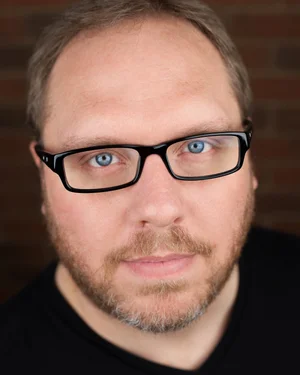
Jeff Hartman, Artistic Director
Headshot Courtesy of Carol Anne Hartman Photography